Invited speakers
Jorik Jooken (Leiden University, the Netherlands & KU Leuven, Belgium): How can computers help in obtaining new results in graph
theory?

This talk consists of two parts. In the first part, I will give an introduction to the domain of computer-assisted
graph theory, which is concerned with developing algorithms in order to help researchers gain insights into various
graph theoretical questions. In particular, I will discuss a broad range of popular techniques from this domain and
briefly talk about their applications. In the second part, I will zoom in on an algorithm for exhaustively
generating graphs and show how executing this algorithm leads to new insights in the domain of graph colouring.
This talk is based on two papers, available at https://arxiv.org/pdf/2508.20825 and https://arxiv.org/pdf/2404.11704.
Jorik Jooken is an FWO Postdoctoral Fellow at KU Leuven, working in the research group of Jan Goedgebeur. He earned
his Ph.D. from KU Leuven in 2023, where he has been a postdoctoral researcher since his graduation. As of August
2026, he will join Leiden University in the Netherlands as an Assistant Professor.
Apart from his activities at KU Leuven, he has also spent several months in various universities abroad such as
Comenius University (Slovakia), Nankai University (China), Western Sydney University (Australia) and Durham
University (United Kingdom).
He is an expert in the field of discrete algorithms for combinatorial problems, with a particular emphasis on
computer-assisted graph theory. He collaborates frequently with other mathematicians and computer scientists on
various topics such as combinatorial optimization, extremal graph theory, graph coloring, long cycles in graphs, and
enumeration of graphs. The topics of some of his latest publications include vertex-critical (P5,W4)-free graphs,
(k,g)-graphs without (g+1)-cycles, girth and connectivity of cubic graphs with a unique longest cycle and a survey
on computer-assisted graph theory.
He has been the advisor to three doctoral students and to numerous bachelor’s and master’s students.
Jernej Vičič (University of Primorska, Slovenia): AI-Generated Text Detection for Under-Resourced
Languages
The rapid development of large language models (LLMs) has created a growing need for reliable methods to
distinguish AI-generated text from human-written text. Existing detection approaches include statistical methods,
stylometric analysis, perplexity-based techniques, transformer-based classifiers, and large neural models trained
specifically for AI-text detection. Although many of these methods achieve high accuracy on benchmark datasets,
their performance often decreases when applied to new domains, new language models, paraphrased texts, or modified
content. Another important limitation is language bias. Most existing detectors are developed and evaluated mainly
for English, while their performance is often much lower for other languages, especially for morphologically rich
and low-resource languages. This talk investigates a simple question: how do existing detectors deal with under
represented (and in the era of LLMs all non-English languages belong to this group) and morphologically rich
languages.
The talk also proposes a simple, but not computationally cheap, and interpretable detection approach based on
Benford's law and transformer embeddings. We hypothesize that AI-generated texts follow Benford's law more closely
than human-written texts when numerical patterns are extracted from contextual embedding representations. We also
hypothesize that the investigated method transfers well across languages and domains. To test this hypothesis,
token-level embeddings are obtained from multilingual and language-specific transformer models and transformed into
leading-digit distributions. The similarity between the observed distributions and Benford's law is measured using
Kullback–Leibler divergence, chi-square statistics, mean squared error, and the coefficient of determination.
The proposed framework is evaluated on multilingual datasets, purposefully tailored for the ITAT conference,
containing English, Slovene, Czech, and Slovak texts. The experiments examine whether the Benford-law hypothesis
holds across languages, whether the approach can transfer between languages, how different embedding models affect
performance. Both multilingual and language-specific transformer models are evaluated. A simple TF-IDF and
Multinomial Naive Bayes classifier is used as a reference baseline along with the comparisons reported by the state
of the art research.
The goal of this study is to determine whether Benford-law-based features capture general characteristics of
AI-generated text that are less dependent on language than existing approaches. By focusing on simple statistical
properties of embedding representations, the proposed method offers a more language-independent alternative for
multilingual AI-text detection, particularly for languages that are underrepresented in current research.
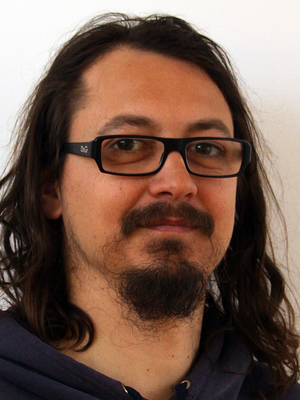
Jernej Vičič is a Full Professor of Computer Science at the University of Primorska, where he is
affiliated with the Faculty of Mathematics, Natural Sciences and Information Technologies (FAMNIT) and the Andrej
Marušič Institute (IAM). He earned his B.Sc., M.Sc., and Ph.D. in Computer Science from the University of Ljubljana,
He has also serves as Head of the Centre for Application Development at UP IAM and Head of the Distributed Ledger
Technologies and Language Technologies Lab at UP FAMNIT.
Professor Vičič combines deep expertise in artificial intelligence and language technologies with
extensive experience in distributed computing and large-scale data systems. His work bridges fundamental research
and practical innovation, contributing to advances in machine translation, intelligent systems, decentralized
infrastructures, and emerging AI technologies.
His recent research includes innovative work on occupancy estimation from indoor air-quality data,
advanced retrieval-augmented generation methods using hypothetical prompt embeddings, large-scale detection of wash
trading in NFT markets, distributed frameworks for large language model inference, open-source AI ecosystems,
privacy-preserving wireless sensor networks, anonymous routing protocols, and decentralized multiplayer
architectures. These contributions demonstrate a consistent focus on scalable intelligent systems, privacy-aware
computing, and the practical deployment of advanced AI technologies.
Professor Vičič has supervised three completed doctoral students and more than sixty master's and
bachelor's students.
Alberto Leporati (University of Milan-Bicocca, Italy): Spiking Neural P Systems: how to use them, and how
to design them

Spiking neural P systems have been introduced in 2006 as the first neural-like model of membrane systems. Similar
to spiking neural networks, considered as the third generation of neural network models, they constitute a
computational model inspired by the spiking mechanism of biological neurons. Among the advantages, compared to
traditional neural networks, there is the promise of implementations that are much more energy efficient.
Over the years, spiking neural P systems have been investigated from both the computational power and applications
points of view. In this talk, after recalling what spiking neural P systems are, and how they work, we will first
see how they can be used to solve computationally hard optimisation problems. Then, we will address the problem of
designing spiking neural P systems aimed at performing a prescribed computational task. In particular, we will
present a framework that can be used to produce spiking neural P systems from a specification written in the WHILE
programming language, and an evolutionary technique that evolves a family of spiking neural P circuits that “learn”
a partially specified multi-output Boolean function. The talk will conclude with some considerations related to the
relationship between spiking neural P systems and other models of spiking neural networks and binarized networks,
machine learning algorithms, and some open problems and possible research directions.
Alberto Leporati is a Full Professor of Computer Science at the University of Milan-Bicocca, where he is
affiliated with the Department of Informatics, Systems, and Communication (DISCo). He earned his B.Sc., M.Sc., and
Ph.D. in Computer Science from the University of Milan.
His research activity concerns the theory of computational complexity, cryptography, and evolutionary algorithms. In
particular, he studies the computational power of models of computation which are inspired by the working of living
cells (Membrane Computing) and the laws of quantum mechanics (Quantum Computing). On these topics, he has published
more than 100 papers on international journals and in peer-reviewed proceedings of international conferences.
He participated in several research projects, financed both at the national level and at the international level,
and supervised four doctoral students.
He is a member of the editorial board of the International Journal of Neural Systems (IJNS).
He is member of the Steering Committee for the CMC international conference series, and vice-president of the
International Membrane Computing Society. He is member of the Scientific Committee of Clusit (the Italian
association on Cybersecurity), and of the Interdepartmental Center on Quantum Technologies (BiQuTe) of the
University of Milan-Bicocca. He is a founding member of the National Association on Cryptography “De Componendis
Cifris”.
He is currently Delegate of the Rector for Digitalization. Furthermore, he represents the University of
Milan-Bicocca at the European Open Science Cloud (EOSC), and in the Digital Credentials Consortium
(https://digitalcredentials.mit.edu/).
Since 2001 he taught Algorithms and Data Structures (Basic and Advanced), Information Theory, Cryptography,
Programming in Java, Formal Languages and Computability, and Quantum Computing. On these topics he supervised more
than 50 master theses in Computer Science, 7 master theses in Mathematics, and more than 130 bachelor theses in
Computer Science.
Nikolaus Hansen (Inria and the Institut Polytechnique de Paris, France): From Data to Knowledge
In this talk we address several aspects around the question of how to interpret data. We start by reminding the logic of research and its defining demarcation line: replicability. We discuss why research may not be replicable and how to navigate past or future replication crises. We emphasize the importance of quantification and how to properly use p-values. Finally, an odds form of Bayes' Theorem, which is more intuitive and easier to apply than the original formulation, allows to incorporating new data into our existing knowledge with relative ease.
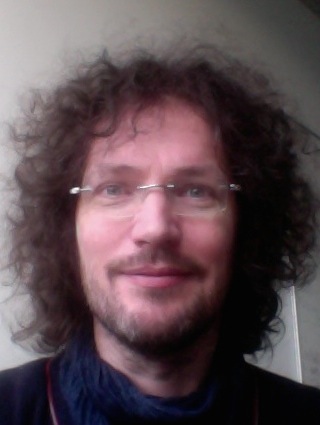
Nikolaus Hansen is a research director at Inria and the Institut Polytechnique de Paris, France. He received a PhD in civil engineering from the Technical University Berlin in 1998 and the Habilitation in computer science from the University Paris-Sud in 2010. His main research interests are stochastic search algorithms in continuous or mixed and high-dimensional search spaces, learning and adaptation in evolutionary computation, and methodologies for meaningful performance assessment and comparison. His research is driven by the goal to eventually develop algorithms that are highly relevant in practice.